The Women-Commodity Spectacle: A Review of Women's History Museum's 'Needle Trades'
Zilu Bhatt, MSC Social Anthropology and DEvelopment
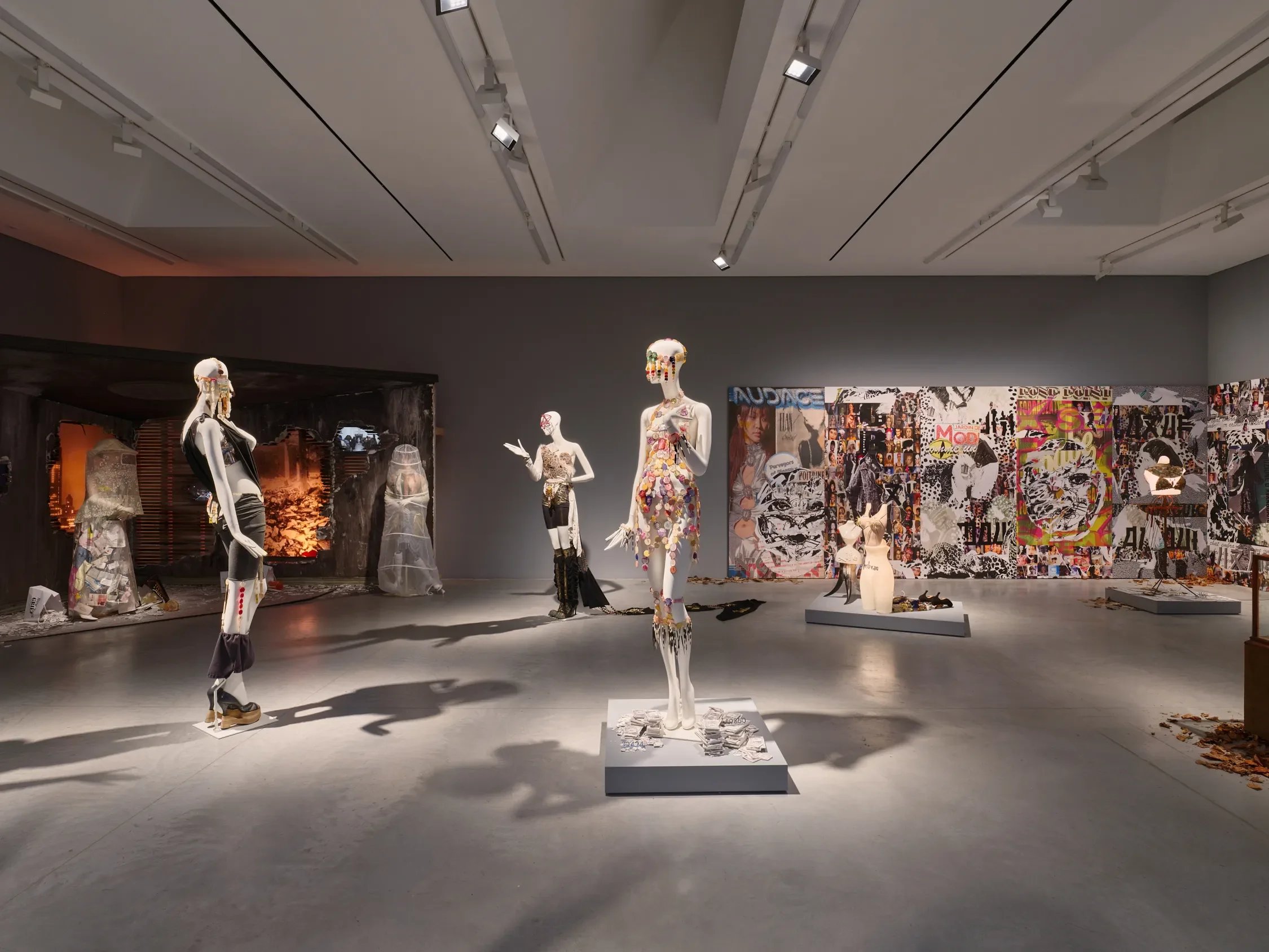
Image: New Document and Amant
It was in May 2025 that I first encountered work by the Women’s History Museum (WHM) in New York. My friend, a current textile student at Parson’s who graciously hosted me for my first visit to the city, had collaborated in design with the Museum’s original runaway performance. ‘Museum Manu,’ the exhibition running from May to June at Company Gallery on the Lower East Side, centered on sculptural footwear. My attention was caught by Women’s History Museum’s reconfigurations and manipulations of haute couture, the uncanny hybrid of pharmaceutical tablets and animal prosthetic and, most regrettably for myself, the single pair of sneakers I had packed for my trip that lusted after a more glamorous replacement for my feet now that I was in Manhattan. It is the city in Sex and the City after all, and it’s not like I was in any financial position to acquire Manolo Blahnik’s.
Fashion-art duo Mattie Barringer and Amanda McGowan founded the Women’s History Museum in 2015 as a project to ‘carve out [their] own space in fashion’ and art, with the name serving as a ‘vessel’ to which both worlds can be simultaneously transgressed and inhabited.
‘Museum Manu’ was an exemplary showcase of their precise capacity to hollow out and expand on these worlds. It called towards transformation and identity, embodying art into fashion, fashion as art, the elastic capacity of the human form - the mimetic capacity of the human form - all laid out in a display of kitschy spectacle.
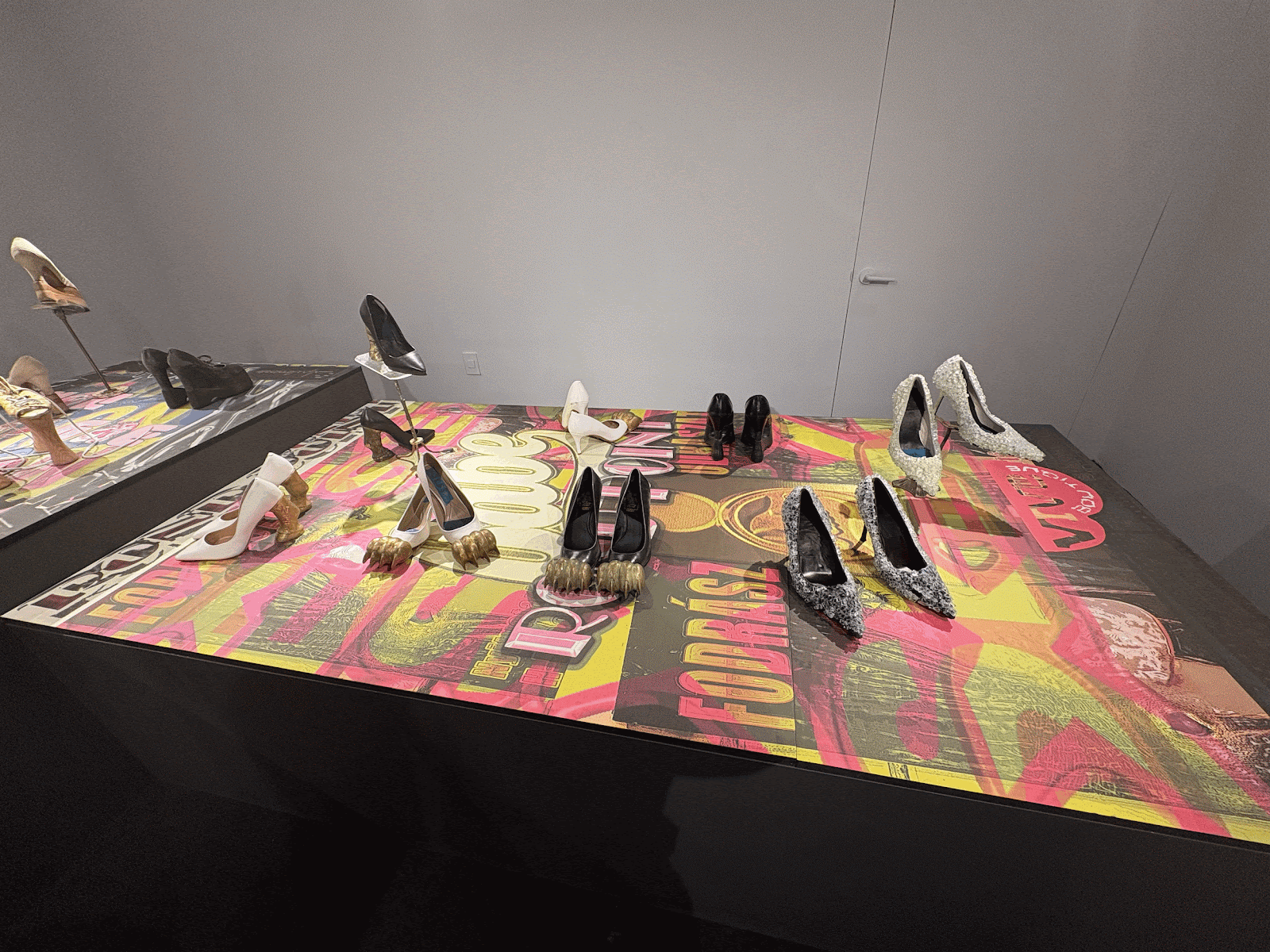
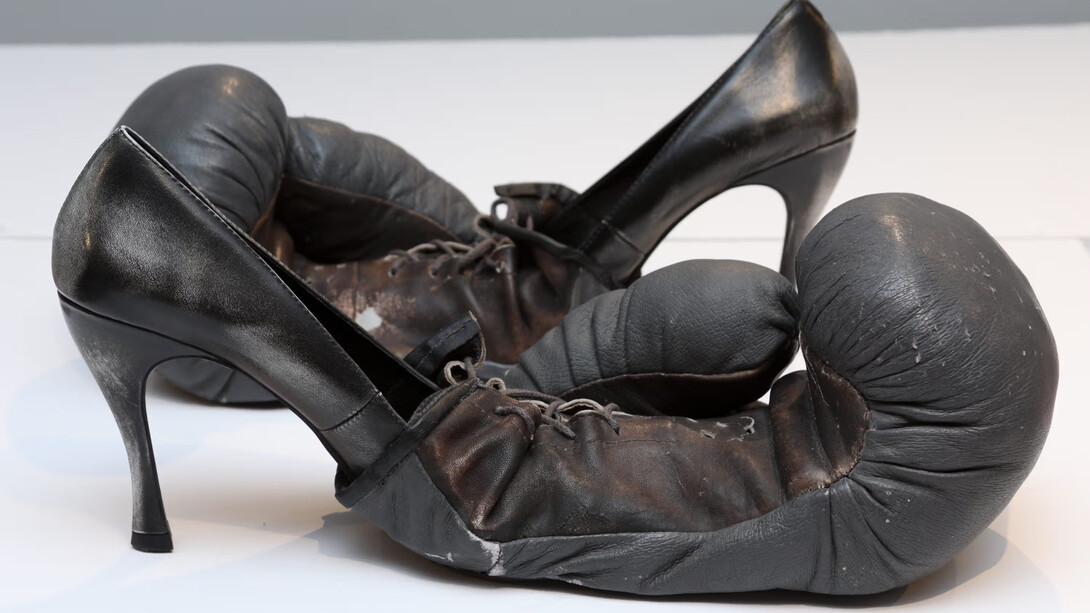
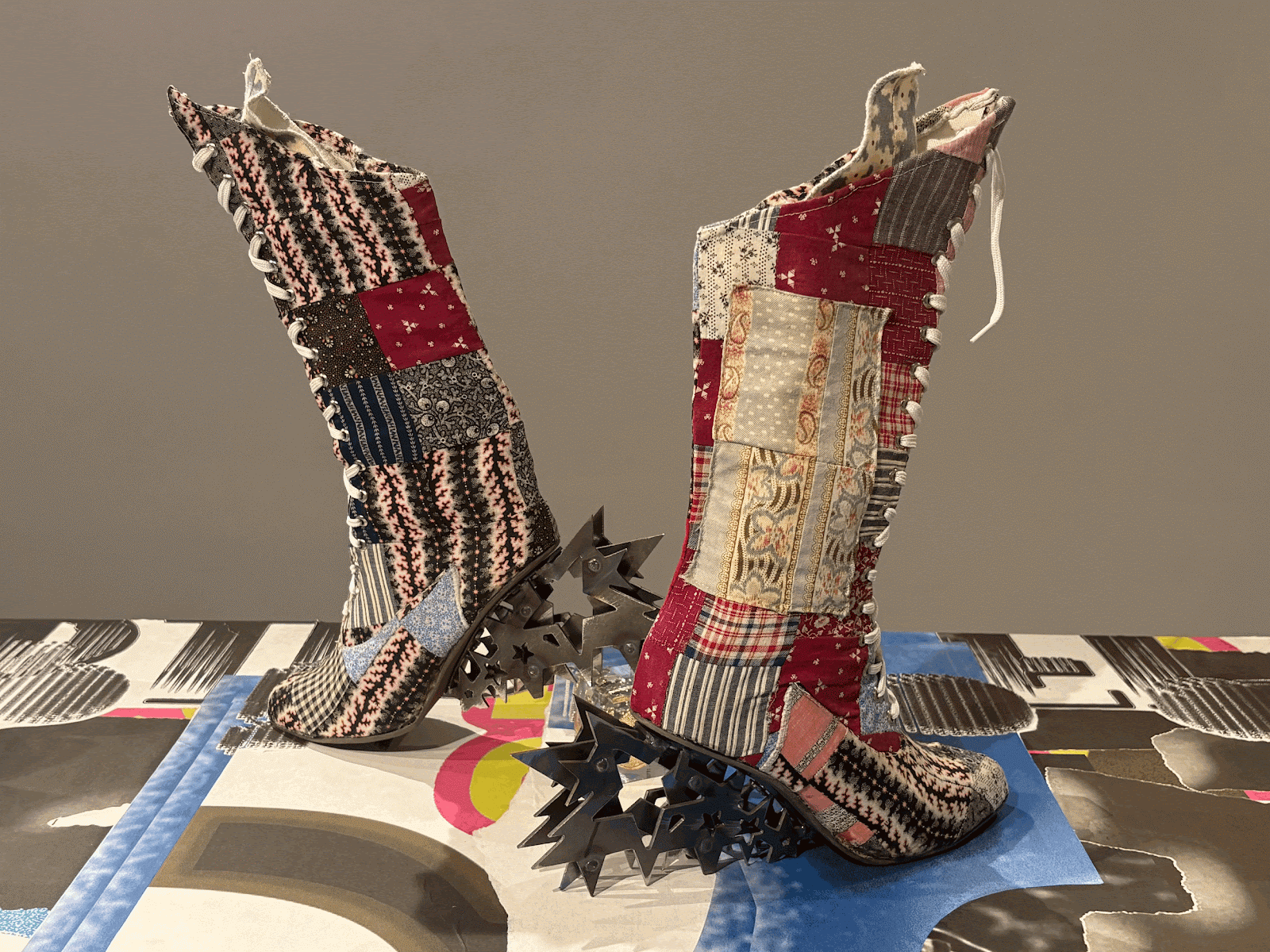
From brass paw court shoes, to shuriken-heeled patchwork boots, to boxing glove kitten heels, Women’s History Museum’s collection speak to a speculative future, or, given their collective-title, a regurgitative display of the past transmuting into the present.
I asked whether the pieces were available to buy. My friend laughed and dismissed the question. ‘Maybe, possibly.’ I felt ashamed that my query was aimed at collecting the art and not concerning itself with the work behind it. Would it really be so bad if I wanted to have something so garish to own? An embodied display of synthetic ecstasy and organic sex appeal would be much easier if I wore heels plastered with pills that read words like ‘seductive’ and ‘novelty’ inside them. In any case, it was out of my budget and the sneakers were working perfectly fine. Nine months later and I am walking down Cambridge Heath Road in knee-high Harley Davidson boots I had bought second-hand in Brighton four years ago. I had seen on Soft Opening gallery’s instagram that WHM would be having their first solo exhibition in London and, this time round, I would be appropriately dressed for it.
‘Needle Trades’ serves as both an aesthetic and material expansion of ‘Museum Manu.’ Combining photography, mannequin garment display, and their sculptural footwear from before, ‘Needle Trades’ exemplifies both my superficial wanting in NYC and their overarching expression in praxis: commodity fetishism of the feminine form.
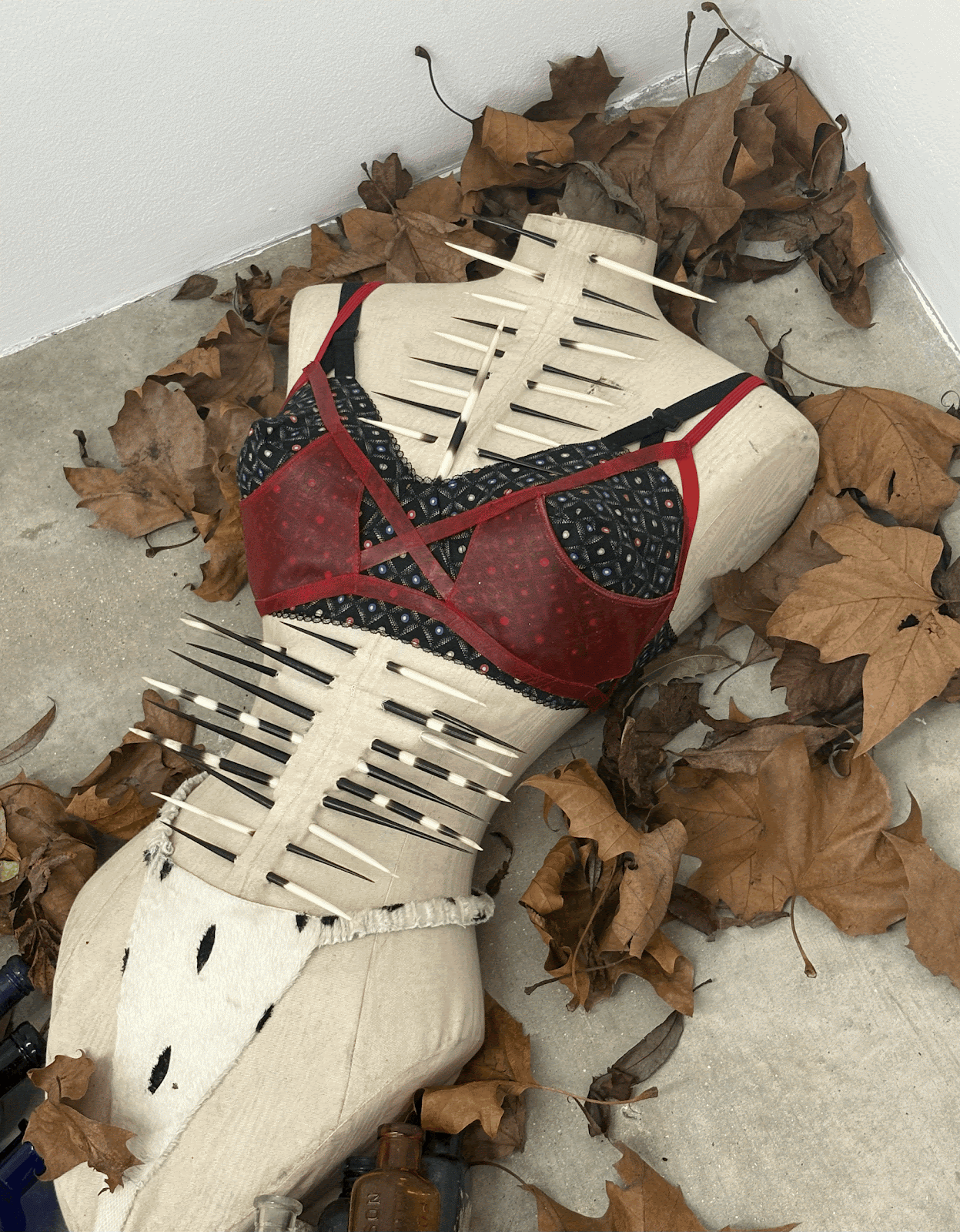
I stress that fetishism is always an abstraction. The fetishisation of a woman abstracts her, dismembers herself to pieces, hyper-sexualised parts, eliding the totality of a person in exchange for her value. It is a deliberate process meant to obfuscate, abstract. Marx’s conceptualisation of commodity fetishism refers to the deliberation of two simultaneous processes of fetishism in the material. Commodities are doubly fetishised: they hide the social production/relations of labour (the collective and collaborative effort required to produce anything) that gives rise to them, whilst standing for the social relations themselves. In this way, the exchange value of the commodity becomes its only value – the monetary, cash, tangible, fungible value of the commodity, rather than the use value. As a result, what appears as social relations between humans is occluded as the relations between things and commodities instead.
I refer to this with a heavy-hand when looking at WHM’s mannequins pierced with porcupine needles resting on the mausoleum floor of Soft Opening, entitled ‘Mon fantasme est un poison’ or ‘My fantasy is a poison.’ What we see here is the outcome of this process; decimated feminine forms teetering between ruin and beauty. The social production and relation of the red leather antique French bra and the procurement of African porcupine quills are mystified behind such a gaudy spectacle of the commodity – the commodity that of being womanhood – the simple, easy, explainable monetary, sell-able value of being a woman. WHM’s work demands us to see both the social and material productions of gendered labour in the garment industry to its absolute extent – the overt manipulation of the female form to a point where Soft Opening cites their collection as ‘seductive cartoons.’ Impossible wasp waists, 1950s pinup lingerie, and cast brass paw belts enrobe the feminine form, acting as an impossible facet part and parcel of the production of a woman her/itself. Referring to both their name and their work, WHM broaden their interest to a paradoxical historical futurism:
‘Being inspired by history, but by what isn't recorded or an idea of what history could have been that wasn't recorded. Visualising that and putting it in the present, contrasting past and present in a way that feels very surreal.’
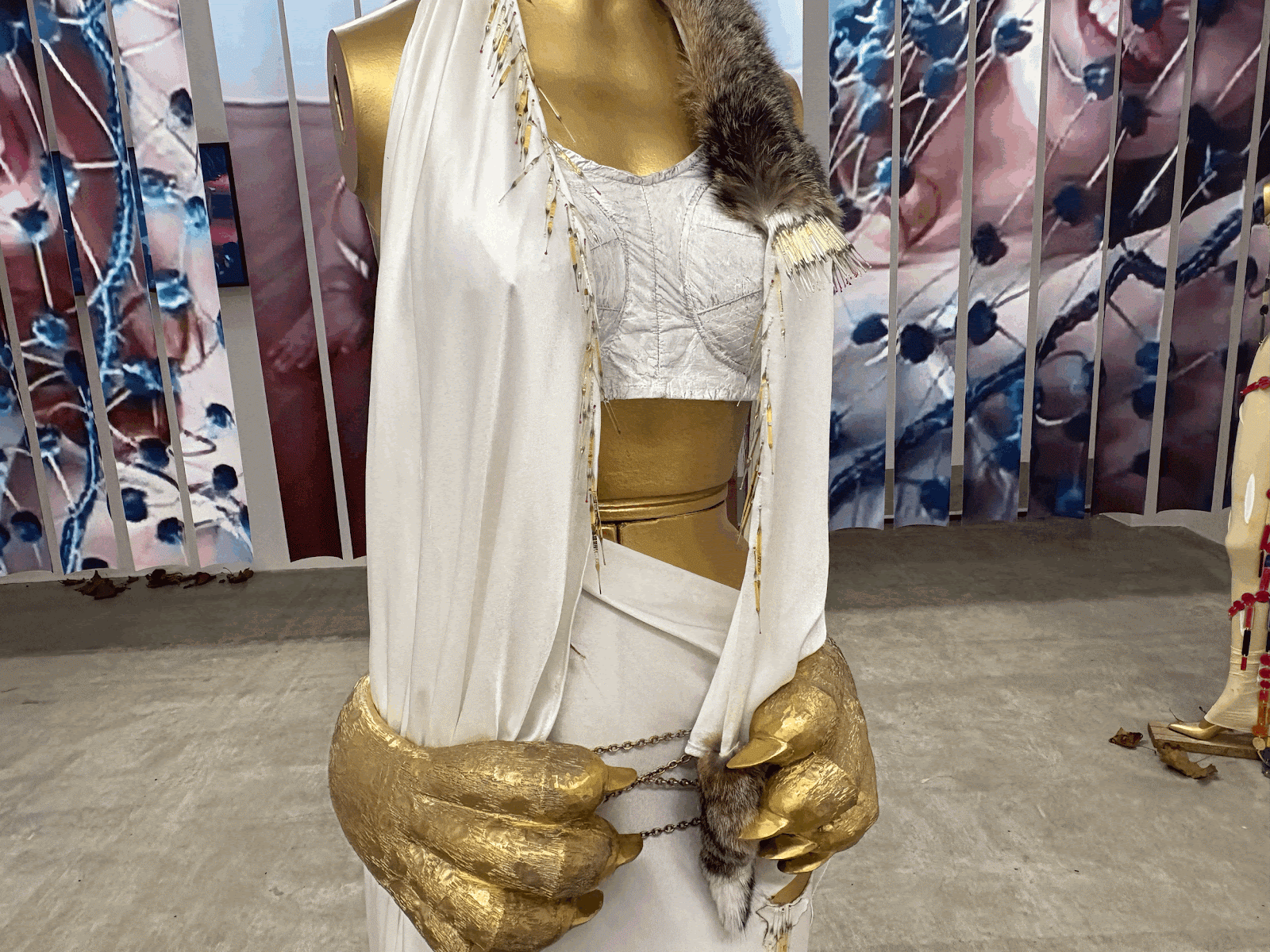
It is hard not to feel WHM’s influences from history when the mannequins are bound, bondaged, deconstructed, corsetted, and manipulated into garish positions - impossible positions. What is most striking is WHM’s use of violent commodities. Throwing stars, clawed heels, needles and pins – there is both pain and brutality behind the pieces. The labour producing both the garment industry and the image of a woman are concealed, dissected and deconstructed into violent spectacles of femininity. Bodies are as much molded and manipulated as materials too. Evocative of Heidegger, whose 1950 essay ‘The Question Concerning Technology’ is characterised by a highly deterministic stance on technology’s ability to manipulate reality and identity. Heidegger’s calling to a ‘standing reserve’ of nature rings true between the displays of bobcat fur and sewn lamb leather of WHM’s couture at ‘Needle Trades.’ Hearkening to a speculative and inevitably barren future, Heidegger’s determinism was shaped by the idea that nature is made to reveal itself in totality as simply a passive resource for human exploitation. When woman and nature are subjugated as commodities, both passive and fertile, fetishism and extraction of the two are simultaneous.
It would be an arduous endeavour to not feel so deterministic about such relations. Their reality is mired by devastation. An exact year before my visit to New York, I was working on my undergraduate dissertation. Disillusioned from my degree’s focus on the darkest dissections of narratives - asphyxiated subalterns and the necropolitics of 20th century literature - I had settled on ecofeminism as the topic, forged from a desire to write about something beautiful. By the end of my research, I had come to the conclusion it was impossible to write about beauty when it came to women and nature. Both, to me, could only be processed as something to be extracted, uprooted, and manipulated.
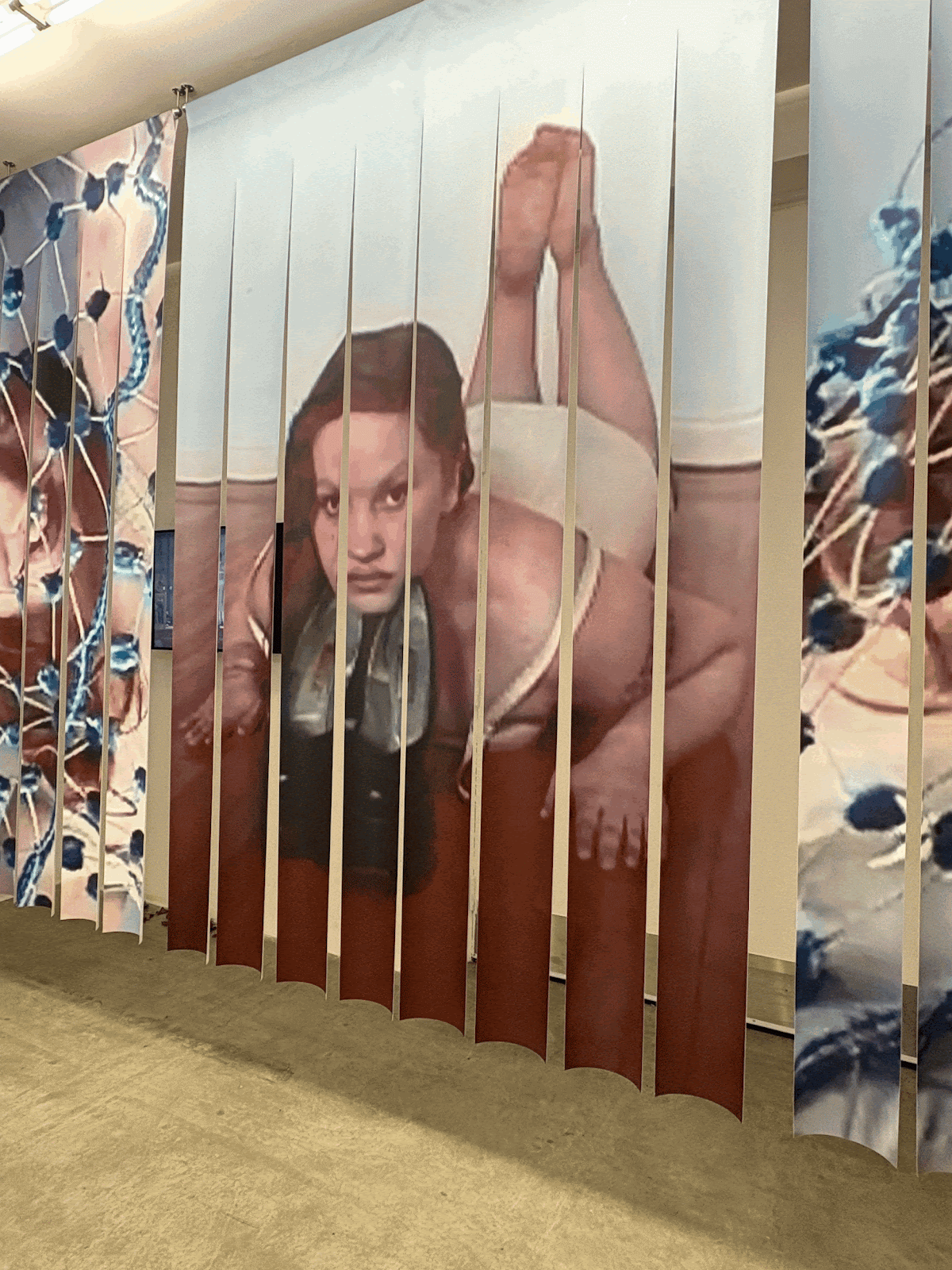
Mattie Barringer of the duo herself is a model for one of their works, ‘Women in Net 1.’ She is photographed lying on her stomach on a wooden floor, her chin resting on one of their earlier sculptural footwear, and her bare feet crossed in display. She is pouting, beautiful, and sultry, though her image, printed onto a vinyl of a car-wash curtain, has been cut into exact strips hanging at the back of the exhibition.
WHM’s work is sexy. I would love to own a bullet bra of vintage red leather and a garter made out of porcupine needles. I argue its sexiness comes from this self-imposed bondage – a vulnerability of the feminine not so much reclaimed as it is dissected, laid bare and open like car-wash curtain strips. If both nature and women are to be extracted inevitably, WHM manipulates the very limits of this extraction through re-definition, bold and garish, and can still speak to the precarity of both. Perhaps, this is what the woman-commodity spectacle is about, the chronic swinging between sadism and masochism, seeking pain and pleasure – equilibrium is precarious and uncomfortable. ‘Needle Trades’ serves as both a shrine and a vessel to the conjoined emotions of ecstasy and pain, and Women’s History Museum are unravelling both in dizzying display.