Wellness Tourism: A Visit to Bali
Rozalie Benova, MSC Social Anthropology
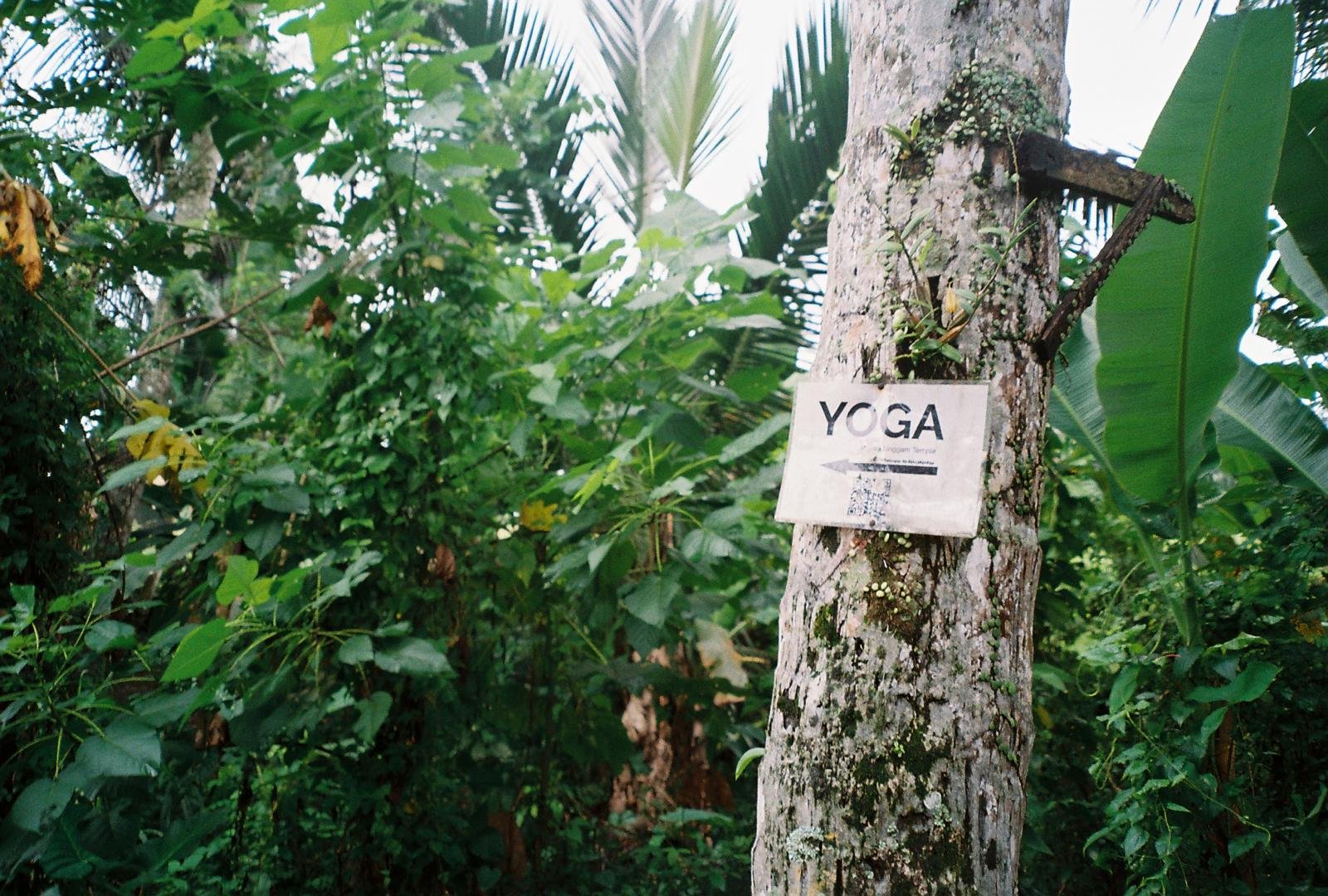
Image: Rozalie Benova
Modern Self-Care and Neoliberal Mobility
Traversing from one landscape to another has been constitutive of fundamental human undertakings for a considerable time; the earliest humans moved in pursuit of food, and, with time, a rising population, animal migration, and the seasonal nature of many food sources demanded that people be mobile. These routes and trajectories, however, were founded on a survivalist logic. Travel was, for most, physically taxing and time costly, and so it only makes sense that when travel did occur for reasons beyond survival, it often took the form of religious and spiritual pilgrimages. These practices can be understood as a significant precursor of the forms of travel and tourism we recognize and engage in today.
Accordingly, travelling now is often coupled with a pursuit of leisure, self-development, and exploring new ‘cultures,’ helping facilitate what is often claimed by tourists to be a form of ‘self-discovery’ attained through acknowledgment and appreciation of different possible life perspectives and ways of being. To boot, the current Western ideological climate is marked by neoliberal aspirations of selfhood; individuals view themselves as ‘entrepreneurs of the self’ and as rational, autonomous actors responsible for their own well-being and success. In this sense, travel is increasingly framed as an investment in the self, through which experiences and cultural exposure are mobilized within neoliberal ideals of individualized responsibility and moralistic self-governance. Among others, a desired accumulation of social capital contributes to this demand insofar as travel experiences function as markers of distinction, signaling cosmopolitanism and being perceived as ‘well-traveled.’
In an age where remote work has made travel a way to live (i.e., digital nomadism) and where these above-mentioned travel experiences act as a high-value currency that signals status and worldliness, to travel means to foster and engage with neoliberal policies such as deregulation and free-market capitalism (which prioritize open markets and reduced barriers). Thus, neoliberalism and tourism are deeply connected on many fronts: destinations are treated as commodities and profit-driven, large-scale projects exploit local resources and communities while concentrating wealth. Alternatively, travel has also been made more accessible thanks to these policies and has widened the pool of motives for the globetrotting and wandering that has become so part and parcel of how we understand not only others’ world(s), but, and rather quite pronouncedly, our own.
On that account, tourism, as we know it today, exists within a dual relationship of Self and the Other; experiencing a region’s local way of being and seeking ‘authenticity’ within this has become, for many tourists, a prerequisite for the treks and tramps they wish to undergo. In this way, appreciating a destination’s cultural sights, attractions, cuisine as well as its (less tangible) exercised lifestyles and value systems becomes situated within a strategy for framing and interpreting cultural differences. The commodification of this difference has led to an increasingly significant market segment of tourism that is concerned with the tourist’s interest in being exposed to and participating in some form of ethnic or cultural Otherness.
In this paper, I will explore a particular niche within cultural tourism known as wellness tourism, whose fragmentation can be understood through its marked emphasis on the (introspective as well as communal) “spiritual, psychological and holistic dimensions” of experiences rather than driven by leisure or adventure. What’s more, I will argue that despite the overtly positive implication of wellness, thanks to its involvement in a proactive pursuit of holistic health and happiness, the wellness tourism industry simultaneously challenges as well as reinforces norms of contemporary Western neoliberal societies, whose logics are, by and large, oppositional to the destinations where wellness tourism is applied and practiced. By way of illustration, I will relate and apply these points to Bali, Indonesia, as the island has, in recent decades, become known as the “ultimate health and wellness destination due to its abundance of spas, wellness temples, massage and beauty parlors, yoga and fitness classes, meditation and treatment centers, and aesthetics,” and whose main source of income relies primarily on this bracket of tourism.
Touristic Entanglements of Wellness
So, what does it mean to be a ‘wellness tourist’ and what kind of ‘wellness’ is being sought? Commonly, wellness tourism is associated with remote, seemingly untouched, and, in travelers’ words, ‘exotic’ places, a framing that must be understood within broader neoliberal imperatives of self-optimization, mobility, and consumption. To travel for wellness means to situate well-being within a pursuit for movement, expenditure as well as selective engagement with the space. The category of the wellness tourist thus raises questions not only about who is able to participate in such forms of travel, but also about how this role affects those who remain outside it yet are nonetheless implicated in its social and economic structures – whether by choice, circumstance, or compulsion.
Tourism necessarily entails physical engagement with unfamiliar spaces. In the context of wellness tourism, this engagement, especially within nature, produces and sustains a notion of healing and authenticity, where a destination is mediated through a ‘tourist gaze’ that purposefully foregrounds certain practices and aesthetics while rendering others peripheral (or even invisible). These layered assembles of landscapes, labor, spiritual practices, and commercial interests have palpable effects, acting as a “worldmaking force in complex entanglements of economics, politics, geographies, materialities, societies, and liminalities.” What becomes apparent here is the Janus-faced dynamic of the neoliberal tourism industry, especially within local tourism governance: on the one hand, the tourism industry generates revenue and provides jobs, on the other, it incites severe drawbacks such as environmental degradation, cultural commodification, strained infrastructure, and social friction. I will now turn to how wellness tourism is practiced, in particular, on the volcanic and tropical island of Bali and delineate how this island is one of many situated in a struggle of cultural projects.
“I’m spiritual, but not religious.“
The implications of such a statement, whose usage becomes ever more common in our enterprising but disparate and globalised world, and has even garnered its own acronym in popular discourse (SBNR), can be explored through Bali’s wellness tourism. As mentioned above, it seems the island itself requires no introduction; the summery island whose climate and fertile volcanic soils reap a rich array of produce – ranging from fruit and vegetables to significant cash crops, such as coffee and coconuts – has become a hotspot for those for whom the above quote resonates. It is known for its diverse landscapes – ranging from coral reefs, beaches, rice fields to mountainous landscapes – and a rich Hindu ‘culture.’ The island makes up the only Hindu-majority province in all of Indonesia, whilst the rest predominantly practice Islam. For foreigners, the space bestows an attractive blend of natural beauty with a spirituality that, for many, is antithetical to the materialistic pressures associated with Western capitalism and neoliberalism. Such a blend has been advertised to the West implicitly since the 19th century and explicitly from the mid-to-late 20th century, thanks to 1960s counterculture.
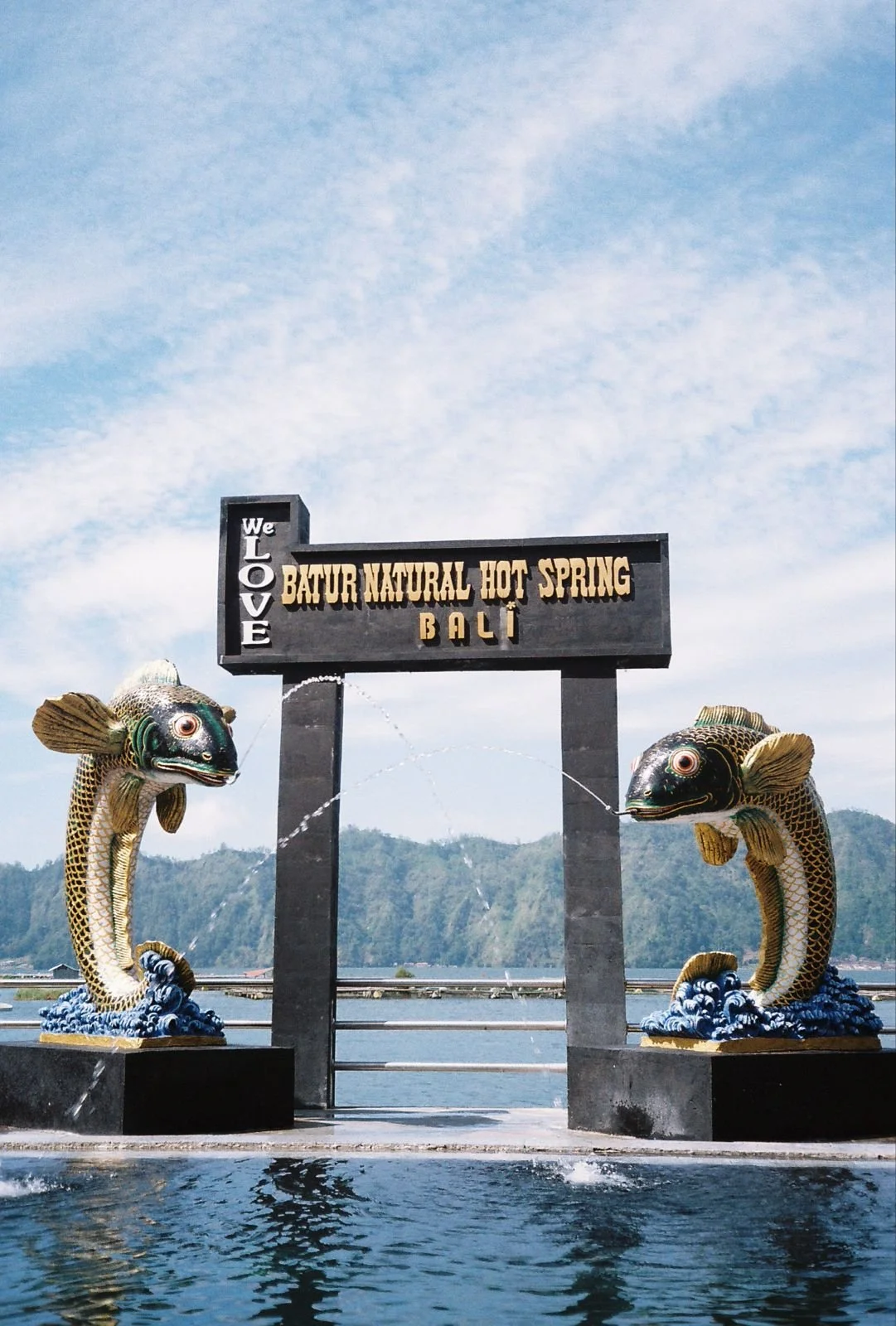
Now, what must be mentioned is how Bali’s rise as a global wellness destination is positioned in how it is marketed: “Wellness Tourism in Bali Is Not Just a Trend, It’s a Lifestyle. […] Bali offers something truly special for wellness seekers. The island has peaceful beaches, calming rice fields, spiritual temples, and friendly local people.” Although this is just one headline of many, the services and localities – as well as people – it targets underscores the general tenor in which Bali as a touristic destination is mired. The allusions to ‘peace,’ ‘calm(ness),’ ‘spirituality,’ and ‘friendliness’ and their juxtaposition with ‘beaches,’ ‘rice fields,’ and ‘temples’ reveals how Bali’s ecological and spiritual environment is utilized as a selling point that is tied to (potential) well-being for the incoming visitor and ‘seeker.’ So, the physical space, as constituted by its topography, plays a significant role in cultivating welfare that must be upheld for the gaze of the tourist (and, more importantly, for what the gaze entails: financial gain).
Here, Bali’s environment becomes part of a commodified package catered to a particular (generally Western) demographic. In essence, wellness tourism “conceals the contradictions between economic growth and environmental sustainability […] and allows neoliberalism to turn the very crises it has created into new sources of accumulation.” This means that although wellness tourism is dubbed an (ethically) sustainable way of travel, it nonetheless operates within a power infrastructure that centers on Westernised products tailored to Western demands. The politics of yoga, for example, reveal how its supposed counterhegemonic status relies on “exaggerated notions of former ‘purity’ and ‘authenticity’ and how, in Western discourse and actuality, yoga is often viewed as an ‘investment,’ or ‘tool,’ utilized to self-optimize, henceforth increasing one’s value (i.e., one’s own human capital) for future endeavors.
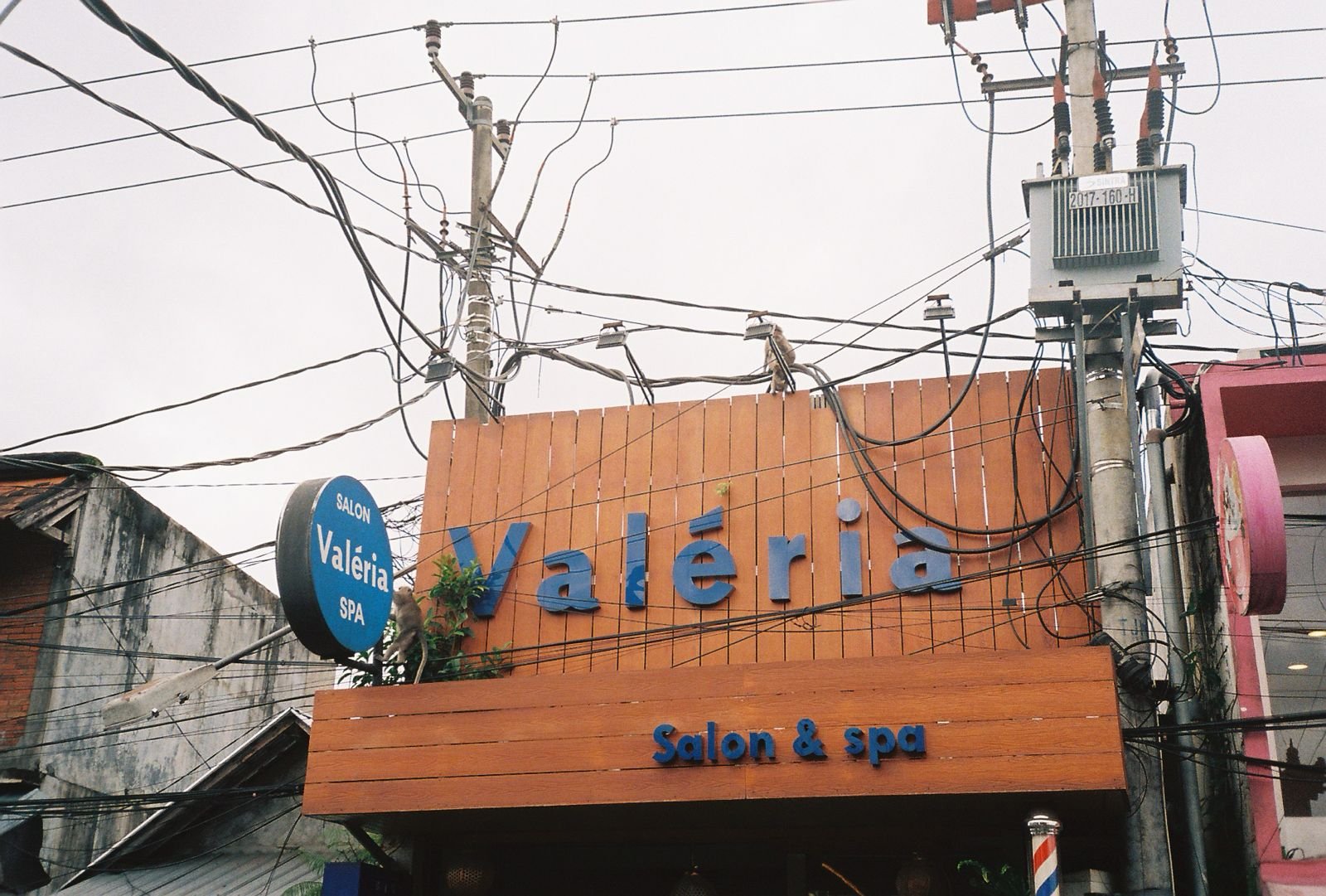
Against this back-drop, my two-week trip to Bali in the summer of 2025 meant that I came face to face with a deluge of ‘salvation goods’ – fostered with the capitalist and neoliberal idea that religion must succeed within a market. One walk down Ubud’s high street, a town in the uplands viewed as Bali’s ‘cultural heart,’ revealed a profusion of ‘well-being’-related services and commodities, ranging from spa treatments, Balinese massages, yoga studios, detox retreats, sound healing, hypnotherapy, nutritional guidance, classes on mindfulness, breathwork, and much more. This profusion of wellness goods illustrated how globalized ideals of self-care, spirituality, and optimization are packaged and sold to tourists, often obscuring local cultural practices and the environmental and economic costs embedded within these industries. The proliferation of services in Ubud showcases the desire of wellness tourists to access curated experiences of ‘authenticity’ and, consequently, personal transformation. In this way, Bali’s spaces become sites where spiritual and economic imperatives converge.
Ultimately, Bali, as an economic and sociocultural site, operates within a framework that attempts to blend a market-driven, tourism-dominated economy laden with quests for meaning and spiritual fulfilment with a social system rooted in Balinese Hinduism. The space has been profoundly shaped by a global demand for its ‘natural’ and ‘cultural’ wonders and beauty. This then begs the question: Can wellness tourism truly be ‘authentic,’ or will it always exist within commercialized operations with ulterior motives? And, if so, within this dynamic, who shapes the experience and who reaps the rewards?