The Solution to Transport Pollution, Part 01: Why Electric Vehicles Won't Solve Our Transport Emissions Problem
Holly Booker, BSC International Relations Year 3
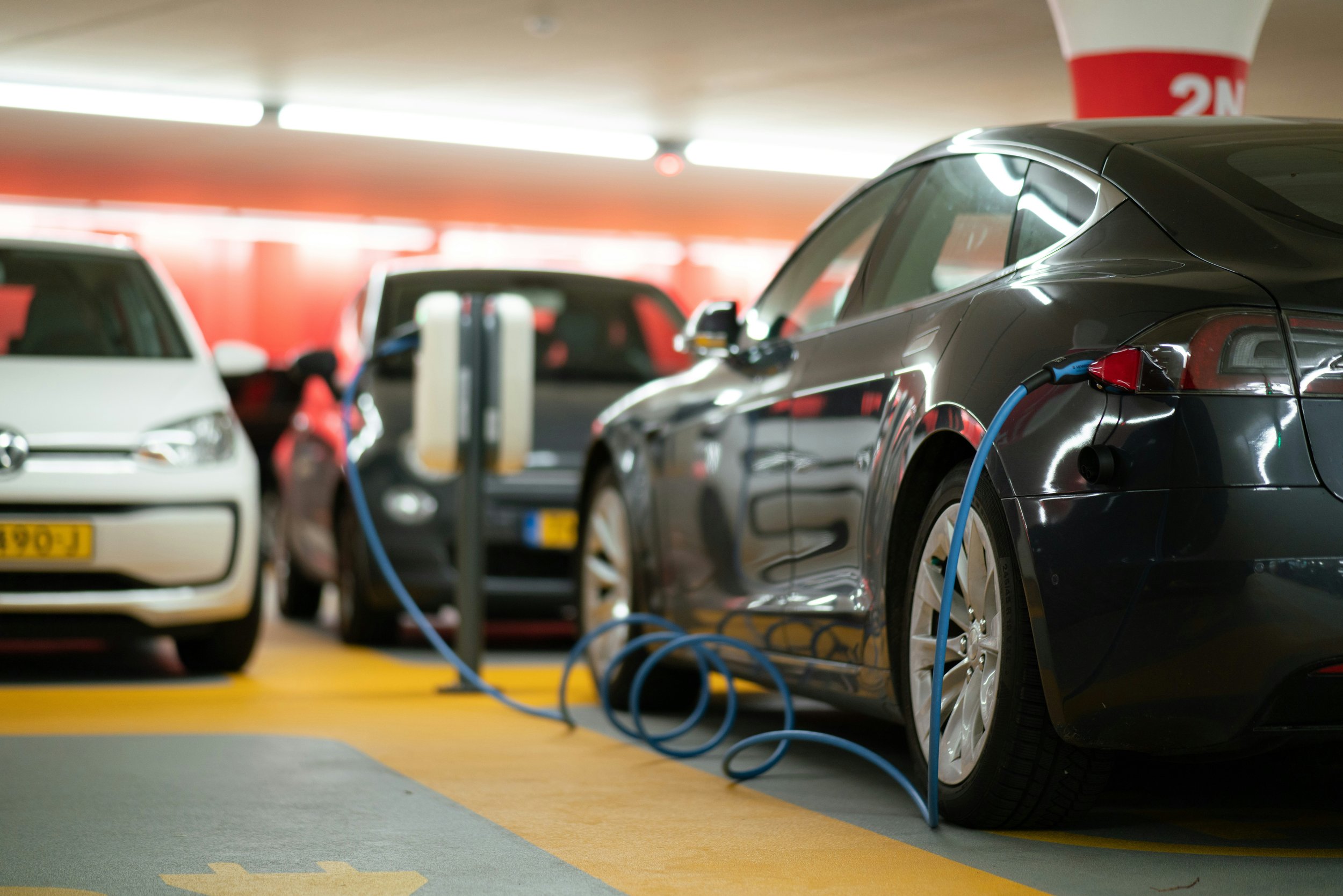
Image: Michael Fousert / Unsplash
Today, 95% of the world’s direct transportation emissions still come from burning primarily petroleum-based fossil fuels, such as gasoline and diesel (United Nations, 2021a). The Intergovernmental Panel on Climate Change (IPCC) asserts that, as the fourth largest contributor to emissions worldwide, direct emissions from transportation currently contribute to around 23% of global energy-related greenhouse gas (GHG) emissions (IPCCC, 2022). The total number of emissions is more than double what it was in the 1970s (United Nations, 2021b), and is predicted to grow a possible 65% by 2050 if insufficient action is taken. Road vehicle emissions (e.g. cars, vans, and trucks) account for 70% of direct emissions from transportation, with the remaining 30% comprising railway (1%), shipping (11%), and aviation (12%) (IPCCC, 2022). Despite the high emission statistics of road vehicles, approximately only 10% of the global population is responsible for the majority of these emissions, primarily those in the OECD countries (Sims et al., 2014, p.606). Moreover, these emissions statistics do not even begin to account for those from the mining and industrial processes associated with vehicle manufacturing, the creation of roads and parking spaces, and all the necessary features of road-based transportation.
Growing environmental awareness of road vehicle usage and its consequences has increased pressure on the automobile industry to shift towards providing eco-friendly means of road transportation, over the commonplace petrol vehicle (known as the internal combustion engine vehicle, or ICE vehicle). In particular, this has resulted in the widespread promotion and growing adoption of the electric vehicle (EV) as a ‘zero-emissions’ alternative. An EV is any motorised vehicle that is in full or in part powered by a lithium-ion battery (LIB) capable of recharge from an external source. A solely battery-powered EV is known as a Battery Electric Vehicle (BEV) and is often portrayed as fully ‘zero-emissions’, due to the presence of a LIB instead of an internal combustion engine (ICE), which results in zero direct exhaust emissions. A partly battery-powered EV—a plug-in hybrid EV—is a vehicle powered by both a lithium-ion battery and an ICE (US Department of Energy, 2021), and is often marketed as a relatively more eco-friendly alternative to the standard ICE. As a result, governments and companies are further incentivising EV adoption among producers and consumers as part of the green transition, through millions of pounds in tax exemptions, subsidies, grants, schemes and the like.
But just how eco-friendly are EVs? Will they really advance us towards a future of zero transportation emissions, or are they just a ploy to maintain the convenience of car usage and the high profits of the power-hungry automobile industry? And is this car-centric approach limiting our horizon for truly sustainable transportation reform? This essay explores these questions, interrogating both the advantages and major concerns associated with EVs.
The Advantages of EVs Compared to ICE Vehicles
At first glance, EVs’ ‘zero emissions’ reputation appears a no-brainer means of mitigating the growth of transportation emissions. By comparison, their lack of an ICE and exhaust pipe to release direct emissions propose a promising alternative to the current fossil fuel-hungry nature of an ICE vehicle. Assuming an ICE vehicle drives its typical average of 11,500 miles per year, a single one will emit approximately 4.7 metric tonnes of carbon dioxide (CO2) per annum (USEPA, 2016). Over its lifetime, this amounts to around 50 metric tonnes of CO2 directly emitted from the exhaust (IEA, 2024).
These emissions heavily affect the atmosphere and surrounding environments, significantly contributing to the enhanced greenhouse effect and global warming, as well as the pollution and acidification of surrounding water bodies, habitat and wildlife loss, and reductions in air and soil quality. The contributions of ICE vehicles to air pollution are also a significant health concern globally. It is estimated that every year, air pollution leads to the premature deaths of around 7 million people worldwide (WHO, 2024), which an emissions-heavy transport industry inevitably contributes to. For example, in the metropolitan area of Barcelona, Spain, air pollution causes as many as 3,500 premature deaths per year, in which traffic congestion is a major contributor (Bausells, 2016). Meanwhile, since EVs do not produce direct emissions from an exhaust, many studies have argued their widespread adoption over ICE vehicles will significantly reduce air pollution and its associated concerns, by reducing the levels of CO2 and nitrogen oxide otherwise directly emitted by ICE vehicles (Rizza et al., 2021; Peters et al., 2020).
Direct emissions are not the only issue with ICE vehicles. The production processes facilitating their existence and function also result in severe environmental damage and human rights violations. For a vehicle to run an ICE in the first place, gasoline has to be mined through the extraction of crude oil. Both this process and that of refining the gasoline after mining release vast amounts of CO2, methane, and nitrous oxide: all potent GHGs. It is estimated that over 102 million barrels of oil are consumed daily around the world, with ICE vehicle consumption accounting for half (Gombar, 2023), creating huge demand. Every year, oil and gas operations produce equal to 5.1 billion tonnes of GHG emissions (International Energy Agency, 2023). Per ICE vehicle, around 5.6 metric tonnes of CO2 are released during its production process (Campbell, 2022).
The extraction of crude oil greatly damages the surrounding environment, due to it necessitating drilling, hydraulic fracturing (fracking), and waste disposal, as well as resulting in oil spills, which cause extreme ecological consequences: induced seismicity, deforestation, biodiversity loss, ocean acidification, explosions, fires and much more. Oil and gas extraction are the dominant drivers of industrial development, affecting thousands of Indigenous communities across the world. One study estimates nearly 60% of Indigenous Peoples’ territory is threatened by industrial development, in a sample size of just 64 countries (Kennedy et al., 2023). In Peru alone, oil activities are observed to affect 41 out of 65 recognised Indigenous communities (Earth Insight, 2024). This takes place through various acts which compromise the welfare and rights of local and Indigenous communities, such as land dispossession and displacement, increased exposure to air pollution and resulting health problems, the contamination of the surrounding environment, and the destruction of sacred cultural heritage sites. Thus, a key benefit argued by proponents of EVs is that they have great potential to reduce fossil fuel dependency, and thus the social and environmental costs of crude oil extraction. The International Energy Agency (2025) highlights that growing EV adoption is reducing oil demand, with light-duty EVs accounting for 80% of oil displacement.
The EVil Consequences of EVs
Production and Mineral Extraction
The above is by no means an exhaustive list of all the consequences of ICE vehicles. However, when examining the overall impact of a transition to EVs, it is clear that EVs are not devoid of detriment either. Whilst they do objectively release considerably less emissions in their lifetime, EVs are further from their ‘zero-emissions’ claim than they initially seem. More emissions are released on average during the production of an EV than during that of an ICE vehicle. It is estimated that the creation of a typical EV releases more than 7 metric tonnes of CO2. In the case of Tesla, the biggest EV company in the world, some EVs may release as little as 2 metric tonnes of CO2 to be produced. Simultaneously, however, other EVs may release as much as 16 metric tonnes of CO2 depending on the energy source used in extraction and the size of the battery. This means up to 80% more emissions can be released during the EV production process compared to the ICE vehicle (Moseman and Paltev, 2022). Whilst some of this can be attributed to the fact that EV development and production are still in their infancy, it is important to note that the mere presence of a lithium battery plays a key role in why the emissions are so high (Linder et al., 2023). EVs contribute to material footprint, in that they require a significant amount of raw material extraction to meet final consumption demands (UNSD, 2019).
To acquire lithium for the battery in the first place, the mineral needs to be mined and drilled: processes which consume copious amounts of water and release vast amounts of CO2 into the surrounding environment and atmosphere. This promotion of a different form of extraction casts a shadow over the supposed advantages of EVs. Over half of the world’s lithium supply comes from what is referred to as the ‘Lithium Triangle’: the South American countries of Chile, Bolivia and Argentina. Here, in what is now being referred to by various media outlets as the ‘scramble for lithium’ following the surging EV boom, mining companies deprive native areas of the accessible groundwater and general water supply used by more than 400 Indigenous groups and local people for their welfare and livelihoods (Rodriguez, 2023).
On average, the extraction of a mere 1 tonne of lithium requires almost 2 million litres (500,000 gallons) of water through a process called brine evaporation, where water is removed from salty brine solutions to concentrate and harvest valuable minerals like lithium. In mining operations in South America, the polluted residue water at the end of production is often dumped in the surrounding environment, contaminating reservoirs. Not only does this lead to severe health problems in local communities, but it strips them of their access to potable water, since minerals and water ownership are given to companies through privatisation (Greenfield, 2022). In Salar de Atacama, Chile, mining companies have consumed approximately 65% of the water supply in the region primarily for lithium extraction (Ahmad, 2020), violating the rights and needs of both people and the planet.
Despite the lithium battery’s name, only 2-6% of it comprises lithium; it is composed of various other minerals, which also require extraction. The IMF estimates that a standard EV battery requires around 8 kilograms of lithium, 14 kilograms of cobalt, 20 kilograms of manganese and 35 kilograms of nickel (Valckx et al., 2021). With this comes a whole host of social and environmental problems. As of 2021, between 60–70% of the global cobalt supply is estimated to be sourced from the Democratic Republic of the Congo (DRC) (Murray, 2022), of which 68% of this accounts for batteries (World Bank, 2021). The increasing demand for EVs will likely only increase the demand for cobalt mining for lithium-ion battery provision. Cobalt is sourced either as a byproduct from pre-existing copper mines or from artisanal mines. The processes of mining and refining, particularly in the case of artisanal mines, require significant labour and result in multitudinous health problems due to exhaustion, accidents, violence, dust particles which cause breathing problems, and exposure to toxic gases and chemicals (Murray, 2022). These concerns are coupled with other more overt forms of human rights violations, such as human trafficking, forced/child labour, and unsafe labour practices (Gross, 2023).
As for environmental consequences, both mineral and industrial mining are known to contaminate nearby rivers and water bodies (Murray 2022), encourage deforestation of primary forests, and release vast amounts of CO2 (Witchalls, 2022). In the case of manganese mining, it is one of the leading mining pollutants due to being a systemic toxicant (Dey et al., 2023). In regions such as South China, manganese mine drainage has proven to pose a huge risk to local ecosystems and downstream drinking water (Huang et al., 2016). The transition to EVs only exacerbates resource demand, furthering socially and environmentally detrimental resource extraction by foreign companies in many developing countries, for the profits of Western companies. Some estimates suggest mineral demand could increase 30 fold by 2040, with batteries accounting for 97% of this increase (IEA, 2025). This indicates how unlikely it is that exponential EV adoption will remain within planetary boundaries.
Air Pollution
One of the biggest features of corporate and governmental campaigns to promote EVs is the ‘zero emissions’ claim, mentioned throughout this essay. This assertion is true to some extent, when only taking into consideration its absence of direct exhaust emissions. That being said, EVs are not entirely emissions-free during usage. In the majority of the countries where EVs are now being used, their electricity consumption during recharge comes from their countries’ national electricity grids, which are often significantly powered by fossil fuels. As of 2023, China, the US, Germany and the UK have among the highest EV sales (World Population Review, 2026), yet none of them have fully renewable energy-based electricity grids. Fossil fuels make up 65%, 59%, 46% and 40% of their national electricity grids respectively (Our World In Data, 2025). Due to this reliance on fossil-fuel-dependent electricity grids for charging, it is therefore estimated that the average EV is indirectly responsible for the release of 28.5 metric tonnes of CO2 throughout its operational lifetime (IEA, 2019).
Even though some countries with high EV usage do have low-carbon electricity grids – such as Norway, Sweden, and Finland – their transition to renewable energy sources (and, therefore, low-emission EVs) has much to do with their sparse and smaller populations, smaller geography, natural resource abundance, and/or favourable climates (or all of the above), making their transition more feasible (Ritchie, 2021). Evidently, not every country that has had a continuous increase in EV sales matches these criteria for a faster, smoother transition to a renewable national grid. Moreover, reliable, renewable energy alternatives are still being developed. This means it may take years for EVs to reduce their indirect emissions.
Moreover, studies have shown that EVs still emit non-exhaust particulate matter (PM2.5) like ICE vehicles do, by virtue of being a road vehicle. This is because all road vehicles experience brake, tyre and road wear, as well as cause road dust resuspension, due to their composition and degree of movement, which in turn generate PM2.5 (Woo et al., 2022). PM2.5 pollution has not only been linked to multiple heart and lung problems, titled as one of the most deadly air pollutants, but it is also associated with various forms of environmental detriment, including – but by no means limited to – lake and stream acidification, soil nutrient depletion, forest and biodiversity damage, and acid rain (United States Environmental Protection Agency, 2024).
The fact that EVs do not counter this issue and instead, maintain it, highlights the problems with ‘zero emission’ claims surrounding EVs. Considering that the presence of a lithium battery makes EVs heavier than the average ICE vehicle (Jolly, 2024), there is a risk of higher PM2.5 emissions (Woo et al., 2022) from increased brake, tyre, and road wear and tear, with one study estimating a 20-40% increase in road wear from EVs (Low et al., 2022). Acknowledging this, alongside the destructive extraction and production processes, reveals a darker side to the green-branding of EV promotion, demonstrating similarities with many of the environmental and social concerns associated with the conventional ICE vehicle.
Urban Expansion
EVs play a part in another problem consistent across individual vehicle usage. In some countries, EV promotion has led to a 10-20% increase in the demand for car trips and, therefore, ownership (Green and Østli, 2025). Whether it be an EV or an ICE vehicle, the continued promotion of private car ownership of any kind incentivises urban expansion to accommodate more cars (for example, car parks, new roads, and the expansion of pre-existing roads). With urban expansion comes various environmental problems associated with artificialisation: deforestation, habitat and biodiversity loss, and an increase in the area of impermeable surfaces, all of which can heighten the risk of floods and heatwaves. It is estimated that, in the US, parking spaces take up to 42% of space in some cities, with the average sitting at around 21% (Garber, 2024). This is not exclusive to the US but rather a trend across numerous countries where car usage is high. In many cases, entire cities have been created for the purpose of accommodating cars. For example, the creation of Milton Keynes in the UK in 1967 was in part oriented around accommodating private vehicle usage (Potter, 2008), and now 24% of the city is car parks (Watson, 2022).
Expanding pre-existing roads and establishing new ones to accommodate more vehicles and reduce congestion has been shown to often result in a positive feedback loop, where it instead increases, rather than reduces, traffic congestion. This is known as Braess’ Paradox. For example, when an additional lane was built for the I-405 Freeway in Los Angeles, its commute time increased by 1 minute (Chen and Hafner, 2014). This exemplifies how demand for additional road space to accommodate more cars can lead to a cycle of accelerating urban expansion and counterproductive increases in traffic congestion. Incentivising private car ownership through EV promotion, even if it endeavours to displace ICE vehicles rather than add to the total number of road vehicles, still appears to maintain the problem of urban expansion and its consequences.
Recycling
Lastly, what is often forgotten about – as with any manufactured product – is its life after disposal. Current findings estimate promising longevity and higher efficiency for EVs, with the average lifespan of an EV approximated at 18.4 years (Nguyen-Tien et al., 2025). However, a significant problem associated with EVs is the fact that they are notoriously difficult to recycle, due to their complex components. Whilst information about the global proportion of lithium-ion batteries (LIBs) that get recycled at their end of life is not concrete, some estimates put the number at around only 59% globally (Gaines et al., 2023). Whilst this statistic concerns various types of electronic products which use LIBs, rather than exclusively EVs, it sets a poor precedent for the current and future state of expended LIBs from EVs as their demand and usage continues to grow. Disposal of LIBs in landfill not only releases toxins and heavy metals which poison soil and groundwater, but it also leads to fires, which cause severe damage, injuries, and the release of toxic pollutants in high volumes.
One report found in its analysis of just 64 waste facilities in the United States, that at least 245 fires occurring across a 7-year period were caused by, or likely caused by, discarded lithium metal or LIBs (United States Environmental Protection Agency, 2021). Increased consumer adoption of EVs will only intensify these problems in the waste management process, unless safer management is implemented and there is greater effort put into recycling LIBs. Some significant developments have been made in the management of battery recycling (such as in the EU) following the EV boom. However, an exponential surge in lithium-battery demand, among other factors, means recycled metals will not be enough to meet EV industry needs for at least a decade (Merlini and Alto, 2025). This means further extraction of new metals will inevitably continue. Ultimately, any developments in EV and LIB recycling will not negate the multitudinous social and environmental costs resulting from the extractive and high-emitting features of the EV transition.
Conclusions
The purpose of this essay is certainly not to imply ICE vehicles and petrol consumption are somehow better than EV usage. Both are extremely detrimental, and in many ways, EVs do have their advantages over ICE vehicles in terms of overall direct emissions reduction and displacing oil demand. However, the social and environmental consequences of the EV boom cannot be ignored, let alone portrayed as an environmentally-friendly alternative that will rid global transportation of its pollutive nature. As evidenced, EV production and consumption still repeat the same destructive patterns of environmental exploitation at the expense of vulnerable communities and ecosystems around the world. Showering a so-called ‘green’ EV transition in millions of pounds worth of grants, tax exemptions, subsidies, schemes and incentives only reproduces the very same cycles of planetary degradation ingrained into the fossil-fuel-dependent transport industry that it claims to be reforming. Rather than continuing to centre private vehicle ownership, governments, companies and organisations should redirect their investments towards less environmentally and socially damaging forms of transportation – public transportation, carpooling, and cycling – to make them more affordable, accessible, reliable, and sustainable. This perspective will be explored in Part 2 of ‘The Solution to Pollution’ essay series, to be released in one of the Earthrise Journal’s following issues.
Bibliography
Ahmad, S. (2020). The Lithium Triangle: Where Chile, Argentina, and Bolivia Meet. [online] Harvard International Review. Available at: https://hir.harvard.edu/lithium-triangle/ [Accessed 1 Dec. 2025].
Bausells, M. (2018). Superblocks to the rescue: Barcelona’s plan to give streets back to residents. [online] the Guardian. Available at: https://www.theguardian.com/cities/2016/may/17/superblocks-rescue-barcelona-spain-plan-give-streets-back-residents. [Accessed 19 Jan. 2026].
Campbell, R. (2022). Car pollution facts: from production to disposal, what impact do our cars have on the planet? [online] Auto Express. Available at: https://www.autoexpress.co.uk/sustainability/358628/car-pollution-production-disposal-what-impact-do-our-cars-have-planet [Accessed 22 Dec. 2025].
Chen, T. (2014). Commute Times Increase One Minute After Freeway Widening Project. [online] NBC Los Angeles. Available at: https://www.nbclosangeles.com/news/added-405-carpool-lane-was-it-worth-the-delays/63017/ [Accessed 16 Dec. 2025].
Dey, S., Tripathy, B., Kumar, M.S. and Das, A.P. (2023). Ecotoxicological consequences of manganese mining pollutants and their biological remediation. Environmental Chemistry and Ecotoxicology, [online] 5, pp.55–61. doi:https://doi.org/10.1016/j.enceco.2023.01.001.
Earth Insight (2024). Oil and Gas Expansion Endangers Isolated Indigenous Peoples in Peru. [online] Earth Insight. Available at: https://earth-insight.org/insight/piaci-threats-oil-and-gas-peru/ [Accessed 21 Dec. 2025].
Friend of the Earth (2022). People of colour likelier living in high pollution areas. [online] Friends of the Earth. Available at: https://friendsoftheearth.uk/system-change/people-colour-likelier-living-high-air-pollution-areas [Accessed 21 Dec. 2025].
Gaines, L., Zhang, J., He, X., Bouchard, J. and Melin, H.E. (2023). Tracking Flows of End-of-Life Battery Materials and Manufacturing Scrap. Batteries, [online] 9(7), p.360. doi:https://doi.org/10.3390/batteries9070360.
Garber, M.D., Tarik Benmarhnia, Mason, J., Morales-Zamora, E. and Rojas-Rueda, D. (2024). Parking and Public Health. Current Environmental Health Reports, 12(1). doi:https://doi.org/10.1007/s40572-024-00465-4.
Gombar, V. (2023). Electric Cars Have Dented Fuel Demand. By 2040, They’ll Slash It | BloombergNEF. [online] BloombergNEF. Available at: https://about.bnef.com/insights/clean-transport/electric-cars-have-dented-fuel-demand-by-2040-theyll-slash-it/.
Green, C. and Østli, V. (2025). The effect of battery-electric vehicle ownership on transport demand and substitution between modes. Transportation Research Part A: Policy and Practice, [online] 199, p.104614. doi:https://doi.org/10.1016/j.tra.2025.104614.
Greenfield, N. (2022). Lithium Mining Is Leaving Chile’s Indigenous Communities High and Dry (Literally). [online] Natural Resources Defense Council. Available at: https://www.nrdc.org/stories/lithium-mining-leaving-chiles-indigenous-communities-high-and-dry-literally [Accessed 5 Dec. 2025].
Gross, T. (2023). How ‘modern-day slavery’ in the Congo powers the rechargeable battery economy. [online] NPR.org. Available at: https://www.npr.org/sections/goatsandsoda/2023/02/01/1152893248/red-cobalt-congo-drc-mining-siddharth-kara [Accessed 3 Dec. 2025].
Huang, Z., Tang, Y., Zhang, K., Chen, Y., Wang, Y., Kong, L., You, T. and Gu, Z. (2016). Environmental risk assessment of manganese and its associated heavy metals in a stream impacted by manganese mining in South China. Human and Ecological Risk Assessment: An International Journal, 22(6), pp.1341–1358. doi:https://doi.org/10.1080/10807039.2016.1169915.
International Energy Agency (2019). Emissions – Global Energy & CO2 Status Report 2019 – Analysis. [online] IEA. Available at: https://www.iea.org/reports/global-energy-co2-status-report-2019/emissions [Accessed 14 Dec. 2025].
International Energy Agency (2021). Mineral requirements for clean energy transitions – The Role of Critical Minerals in Clean Energy Transitions. [online] IEA. Available at: https://www.iea.org/reports/the-role-of-critical-minerals-in-clean-energy-transitions/mineral-requirements-for-clean-energy-transitions [Accessed 21 Dec. 2025].
International Energy Agency (2023). Emissions from Oil and Gas Operations in Net Zero Transitions A World Energy Outlook Special Report on the Oil and Gas Industry and COP28. [online] Available at: https://iea.blob.core.windows.net/assets/743af33c-b2f5-4a93-a925-1b08f6438e61/EmissionsfromOilandGasOperationinNetZeroTransitions.pdf [Accessed 23 Dec. 2025].
International Energy Agency (2024). EV Life Cycle Assessment Calculator. [online] IEA.org. Available at: https://www.iea.org/data-and-statistics/data-tools/ev-life-cycle-assessment-calculator [Accessed 23 Dec. 2025].
International Energy Agency (2025). Outlook for energy demand – Global EV Outlook 2025 – Analysis - IEA. [online] IEA. Available at: https://www.iea.org/reports/global-ev-outlook-2025/outlook-for-energy-demand [Accessed 21 Dec. 2025].
IPCC (2022). Chapter 10: Transport. [online] www.ipcc.ch. Available at: https://www.ipcc.ch/report/ar6/wg3/chapter/chapter-10/ [Accessed 19 Dec. 2025].
Jbaily, A., Zhou, X., Liu, J., Lee, T.-H., Kamareddine, L., Verguet, S. and Dominici, F. (2022). Air pollution exposure disparities across US population and income groups. Nature, [online] 601(7892), pp.228–233. doi:https://doi.org/10.1038/s41586-021-04190-y.
Jolly, J. (2024). Are electric cars too heavy for roads, bridges and car parks? The Guardian. [online] 21 Mar. Available at: https://www.theguardian.com/business/2024/mar/25/are-electric-cars-too-heavy-for-british-roads-bridges-and-car-parks.
Kennedy, C.M., Fariss, B., Oakleaf, J.R., Garnett, S.T., Fernández-Llamazares, Á., Fa, J.E., Baruch-Mordo, S. and Kiesecker, J.M. (2023). Indigenous Peoples’ lands are threatened by industrial development; conversion risk assessment reveals need to support Indigenous stewardship. One Earth, [online] 6(8). doi:https://doi.org/10.1016/j.oneear.2023.07.006.
Linder, M., Nauclér, T., Nekovar , S., Pfeiffer , A. and Vekić, N. (2023). The Race to Decarbonize electric-vehicle Batteries | McKinsey. [online] www.mckinsey.com. Available at: https://www.mckinsey.com/industries/automotive-and-assembly/our-insights/the-race-to-decarbonize-electric-vehicle-batteries [Accessed 21 Dec. 2025].
Low, J.M., R. Stuart Haszeldine and Julien Mouli-Castillo (2022). The hidden cost of road maintenance due to the increased weight of battery and hydrogen trucks and buses—a perspective. Clean Technologies and Environmental Policy, 25(3), pp.757–770. doi:https://doi.org/10.1007/s10098-022-02433-8.
Merlini, J. and Alto, R.M. (2025). Metals for mobility: How mining can meet electric vehicle demand. [online] World Economic Forum. Available at: https://www.weforum.org/stories/2025/02/metals-for-mobility-how-mining-can-meet-electric-vehicle-demand/ [Accessed 23 Dec. 2025].
Moseman, A. and Paltsev, S. (2022). Are Electric Vehicles Definitely Better for the Climate than gas-powered cars? [online] MIT Climate Portal. Available at: https://climate.mit.edu/ask-mit/are-electric-vehicles-definitely-better-climate-gas-powered-cars.
Murray, A. (2022). Cobalt Mining: The Dark Side of the Renewable Energy Transition. [online] Earth.org. Available at: https://earth.org/cobalt-mining/ [Accessed 4 Dec. 2025].
Nguyen-Tien, V., Zhang, C., Strobl, E. and Elliott, R.J.R. (2025). The closing longevity gap between battery electric vehicles and internal combustion vehicles in Great Britain. Nature Energy, [online] 10. doi:https://doi.org/10.1038/s41560-024-01698-1.
Our World In Data (2025). Electricity generation from fossil fuels, nuclear and renewables. [online] Our World in Data. Available at: https://ourworldindata.org/grapher/elec-mix-bar?country=OWID_WRL~ZAF~IND~AUS~JPN~CHN~USA~GBR~BRA~CAN~SWE~NOR~DEU~FRA [Accessed 13 Dec. 2025].
Peters, D.R., Schnell, J.L., Kinney, P.L., Naik, V. and Horton, D.E. (2020). Public Health and Climate Benefits and Tradeoffs of U.S. Vehicle Electrification. GeoHealth, 4(10). doi:https://doi.org/10.1029/2020gh000275.
Potter, S. (2008). THE CHALLENGE OF SUSTAINABLE SUBURBIA. Southampton, UK: University Transport Study Group .
Ritchie, H. (2021). Which countries get the most electricity from low-carbon sources? [online] Our World in Data. Available at: https://ourworldindata.org/low-carbon-electricity-by-country [Accessed 13 Dec. 2025].
Rizza, V., Torre, M., Tratzi, P., Fazzini, P., Tomassetti, L., Cozza, V., Naso, F., Marcozzi, D. and Petracchini, F. (2021). Effects of deployment of electric vehicles on air quality in the urban area of Turin (Italy). Journal of Environmental Management, [online] 297, p.113416. doi:https://doi.org/10.1016/j.jenvman.2021.113416.
Road Genius (2023). EV Sales Statistics | Top Countries in 2023. [online] Road Genius. Available at: https://roadgenius.com/cars/ev/statistics/sales-by-country/ [Accessed 12 Dec. 2025].
Rodriguez, A. (2023). Lithium Extraction and its Impacts on Indigenous Communities. [online] International Relations Review. Available at: https://www.irreview.org/articles/2023/10/11/lithium-extraction-and-its-impacts-on-indigenous-communities [Accessed 6 Dec. 2025].
Sims, R., Schaeffer, R., Creutzig, F., Cruz-Núñez, X., D', M., Brazil, A., Dimitriu, D., Figueroa, M., Fulton, L., Kobayashi, S., Lah, O., Mckinnon, A., Newman, P., Deakin, E., Kahn, S., Brazil, R., Soares, B., Borba, M., Brazil and Schaeffer, R. (2014). 8 Transport Coordinating Lead Authors: Lead Authors: Review Editors: Chapter Science Assistant. [online] Available at: https://www.ipcc.ch/site/assets/uploads/2018/02/ipcc_wg3_ar5_chapter8.pdf.
U.S. Department Of Energy (2021). Alternative Fuels Data Center: Electric Vehicle (EV) Definition. [online] afdc.energy.gov. Available at: https://afdc.energy.gov/laws/12660 [Accessed 20 Dec. 2025].
United Nations (2021a). FACT SHEET CLIMATE CHANGE. [online] Available at: https://www.un.org/sites/un2.un.org/files/media_gstc/FACT_SHEET_Climate_Change.pdf [Accessed 8 Dec. 2025].
United Nations (2021b). Facts and Figures. [online] United Nations. Available at: https://www.un.org/en/actnow/facts-and-figures [Accessed 16 Dec. 2025].
United States Environmental Protection Agency (2021). An Analysis of Lithium-ion Battery Fires in Waste Management and Recycling. [online] Available at: https://www.epa.gov/system/files/documents/2021-08/lithium-ion-battery-report-update-7.01_508.pdf [Accessed 18 Dec. 2025].
United States Environmental Protection Agency (2024). Health and Environmental Effects of Particulate Matter (PM). [online] US EPA. Available at: https://www.epa.gov/pm-pollution/health-and-environmental-effects-particulate-matter-pm [Accessed 15 Dec. 2025].
United Nations Statistics Division (2019). SDG indicators. [online] Un.org. Available at: https://unstats.un.org/sdgs/report/2019/goal-12/. [Accessed 19 Jan. 2025].
USEPA (2016). Greenhouse Gas Emissions from a Typical Passenger Vehicle. [online] www.epa.gov. Available at: https://www.epa.gov/greenvehicles/greenhouse-gas-emissions-typical-passenger-vehicle#typical-passenger [Accessed 23 Dec. 2025].
Valckx, N., Stuermer, M., Seneviratne, D. and Ananthakrishnan, P. (2021). Metals Demand From Energy Transition May Top Current Global Supply. [online] IMF. Available at: https://www.imf.org/en/Blogs/Articles/2021/12/08/metals-demand-from-energy-transition-may-top-current-global-supply [Accessed 4 Dec. 2025].
Watson, I. (2022). Reclaiming the Roads | 3DReid. [online] 3DReid. Available at: https://www.3dreid.com/insights/reclaiming-the-roads/ [Accessed 15 Dec. 2025].
Witchalls, S. (2022). The Environmental Problems Caused by Mining. [online] Earth.org. Available at: https://earth.org/environmental-problems-caused-by-mining/ [Accessed 5 Dec. 2025].
Woo, S.-H., Jang, H., Lee, S.-B. and Lee, S. (2022). Comparison of total PM emissions emitted from electric and internal combustion engine vehicles: An experimental analysis. Science of The Total Environment, 842, p.156961. doi:https://doi.org/10.1016/j.scitotenv.2022.156961.
World Bank (2021). COBALT IN THE DEMOCRATIC REPUBLIC OF CONGO. [online] World Bank. Available at: https://documents1.worldbank.org/curated/en/099500001312236438/pdf/P1723770a0f570093092050c1bddd6a29df.pdf [Accessed 4 Dec. 2025].
World Health Organization (2024). Air Pollution. [online] World Health Organization. Available at: https://www.who.int/health-topics/air-pollution#tab=tab_2. [Accessed 19 Jan. 2025].
World Population Review (2026). Electric Car Use by Country 2026. [online] World Population Review. Available at: https://worldpopulationreview.com/country-rankings/electric-car-use-by-country [Accessed 19 Jan. 2026].